How the Club was governed
For a network of independent cities, the International Black Sea Club maintained a clear and recognisable institutional structure. Its arrangements followed the pattern common to municipal associations: a broad assembly of all members setting direction, a smaller board managing affairs between assemblies, and a permanent secretariat handling day-to-day work. The paragraphs below describe these bodies in general, institutional terms; individual office-holders are not named in this reference.
The General Assembly
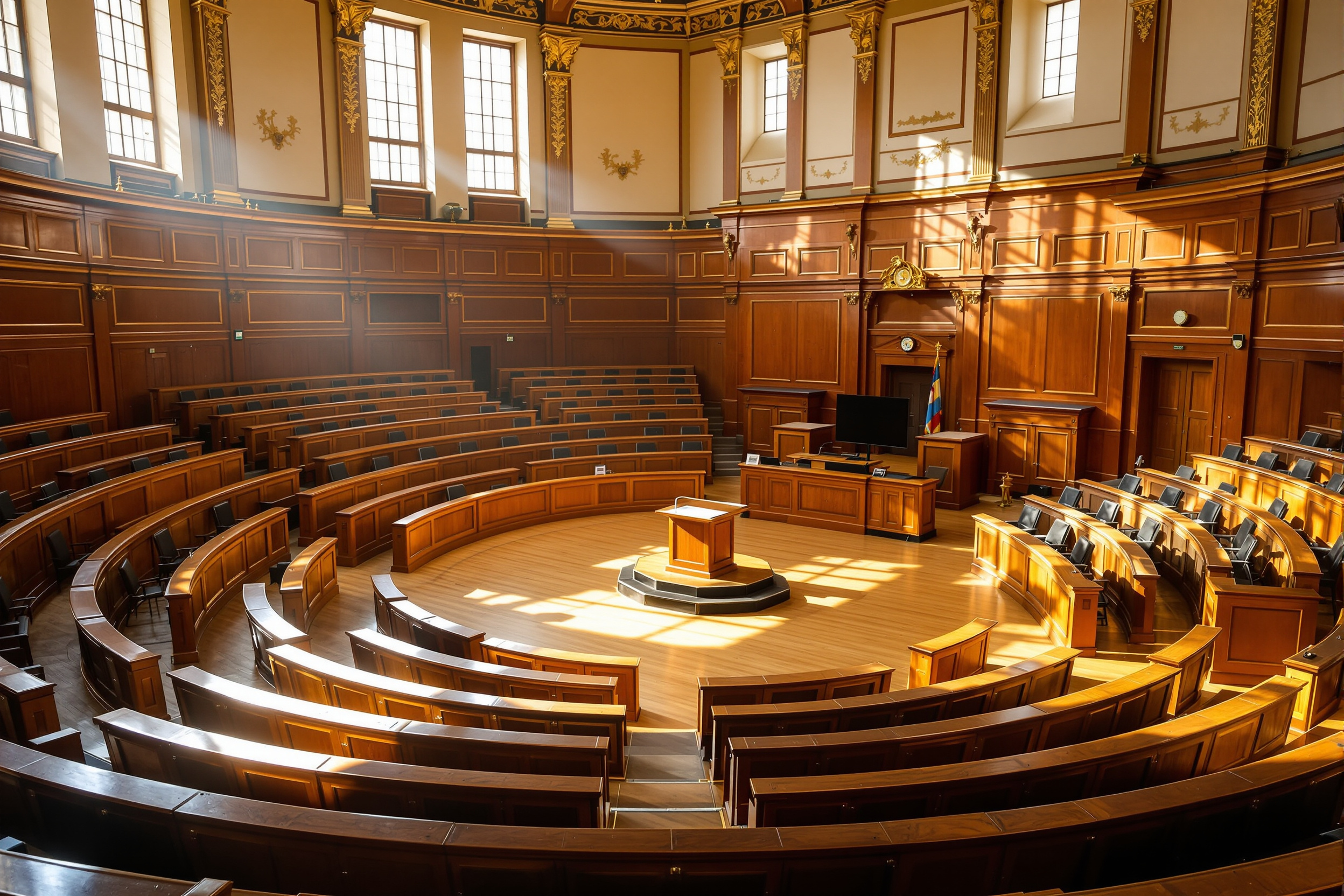
The General Assembly was the Club's supreme body. It brought together representatives of all member cities, usually led by their mayors, and met in numbered sessions hosted by different cities in turn. The Assembly adopted the Club's resolutions, admitted new members, approved the programme of work and heard reports from the other bodies. Decisions taken here carried the authority of the whole membership. The assemblies page traces this sequence of meetings.
The Managing Board
Between assemblies the Club was steered by a Managing Board drawn from a rotating group of member cities. The Board met more frequently than the full Assembly — board meetings are recorded in cities such as Galati — and dealt with the running of the Club: preparing the agenda for the next assembly, overseeing joint projects, and coordinating the work of the executive.
Executive Directorate and Secretariat
Practical administration fell to an Executive Directorate and a Secretariat. These bodies kept the Club's records, maintained contact with member cities and with partner organizations, prepared documents for meetings, and ensured continuity from one presidency to the next. A separate controlling, or audit, function reviewed the Club's finances and reported to the Assembly, a normal safeguard in a membership organization.
The rotating presidency
Leadership of the Club rotated. The presidency was held for a fixed term by the mayor of a member city, passing periodically to another city so that no single member dominated — a familiar device in city networks that keeps ownership shared. The president chaired the assemblies and represented the Club to outside bodies during the term of office. The presidency was thus an institutional role attached to a city for a period, rather than a permanent personal post.
A Business Council
Alongside the municipal bodies the Club maintained a Business Council, reflecting its strong interest in trade and investment. This brought commercial and port-related interests into contact with the municipal network, in keeping with the Club's founding aim of easing business cooperation among Black Sea cities. Comparable structures can be seen across the wider municipal movement documented by United Cities and Local Governments.
Membership and representation
Each member city was represented in the Club through its municipal authority, usually with the mayor as its principal delegate and supported by officials responsible for foreign or inter-city relations. Cities could take part in the Club's projects according to their interests and means, and the voluntary nature of the association meant that participation ebbed and flowed with the circumstances of each city. Decisions of the Assembly applied to the Club as a body, but their implementation always depended on the willing cooperation of the individual members — the normal condition of any voluntary network of local governments, where authority ultimately rests with the participating cities themselves.