The General Assemblies
The assemblies were the heartbeat of the International Black Sea Club. Held in numbered sequence and hosted in turn by member cities, they were the occasions on which the whole network came together to take decisions, renew acquaintance and plan the year ahead. Across the Club's life the assemblies ran into the twenties, a record of remarkable persistence for a voluntary body spanning so many frontiers.
What an assembly did
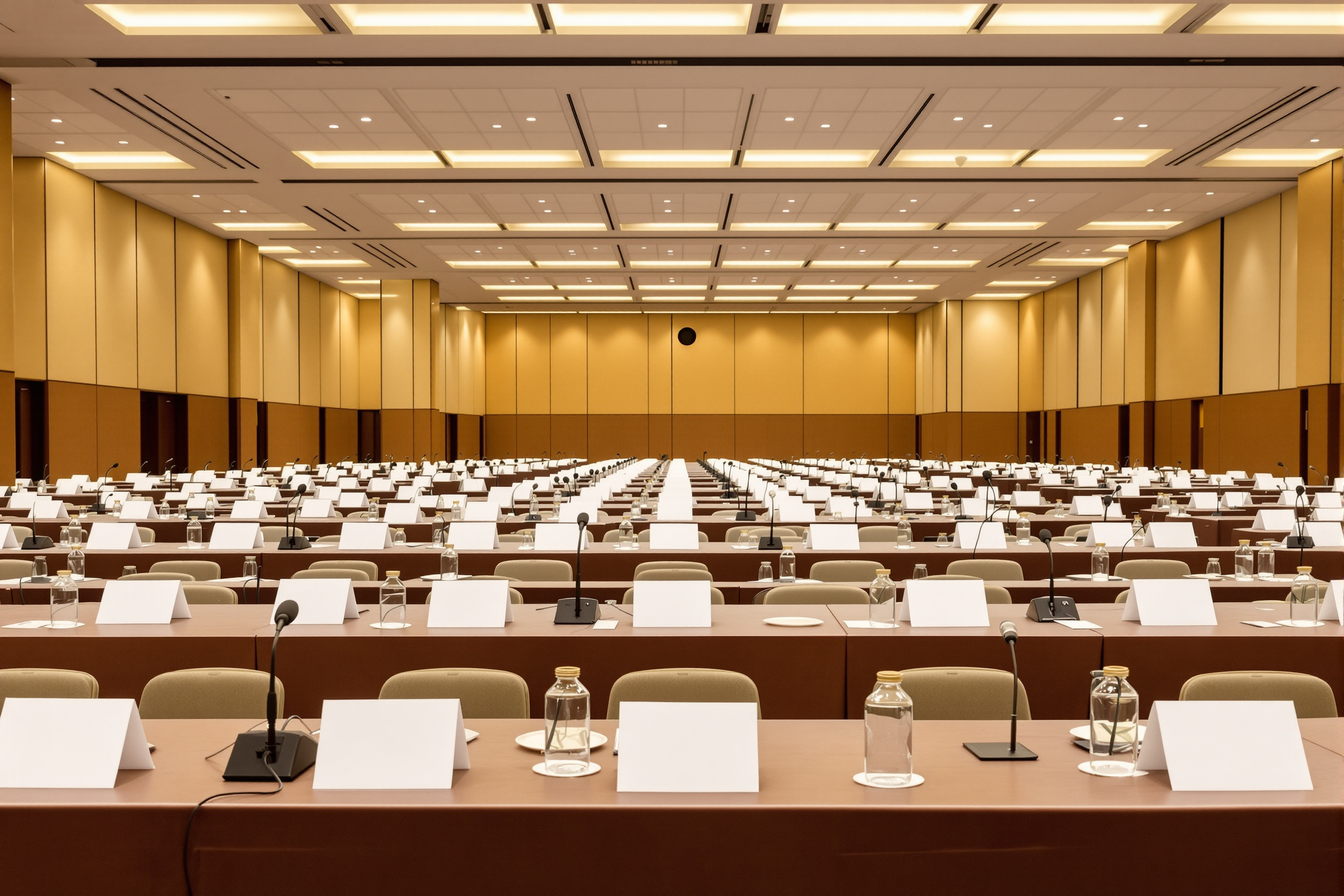
A typical assembly opened with an address from the presiding city, adopted its agenda, and then worked through the substance of the Club's affairs. Delegates heard activity reports from the Managing Board, the Executive Directorate and the Secretariat, reviewed the accounts through the controlling body, and debated and adopted resolutions on the Club's programme. New members might be welcomed, joint projects approved, and the next host city confirmed. Minutes were kept and circulated to members afterwards.
Hosting in rotation
By rotating the host city, the assemblies spread the work — and the visibility — around the membership. A city that hosted put its harbour, its civic buildings and its hospitality at the service of the whole Club, and in return gained the attention of the network. Cities such as Odessa, where the Club was founded, and Galati on the lower Danube, both figure among the hosts. The later assemblies continued this pattern into the mid-2010s; among the last recorded was the twenty-fifth assembly, convened at Galati in Romania in May 2015.
Resolutions and follow-up
The value of an assembly lay in what followed it. Resolutions committed the Club to particular projects — a cultural festival, an environmental initiative, a youth or sporting exchange — which the board and directorate then carried forward between meetings. In this the Club resembled other city networks, where the annual congress sets direction and a permanent staff turns it into work, much as in the assemblies described by the Council of European Municipalities and Regions.
More than a meeting
For the host city an assembly was also a chance to show itself to the region. Delegates were welcomed with cultural programmes, visits to the port and civic institutions, and the ordinary hospitality that turns a formal gathering into a lasting acquaintance. Much of the Club's real value grew from these informal contacts: a conversation between two harbour masters, or between officials responsible for tourism or the environment, often did more to spread good practice than any resolution. In this the assemblies worked like the congresses of city networks everywhere, where the corridors matter as much as the chamber.
A documentary record
Because each assembly generated agendas, minutes and resolutions, the Club left behind a paper trail that is the main source for its history. The documents and records page outlines the kinds of records the Club produced.